
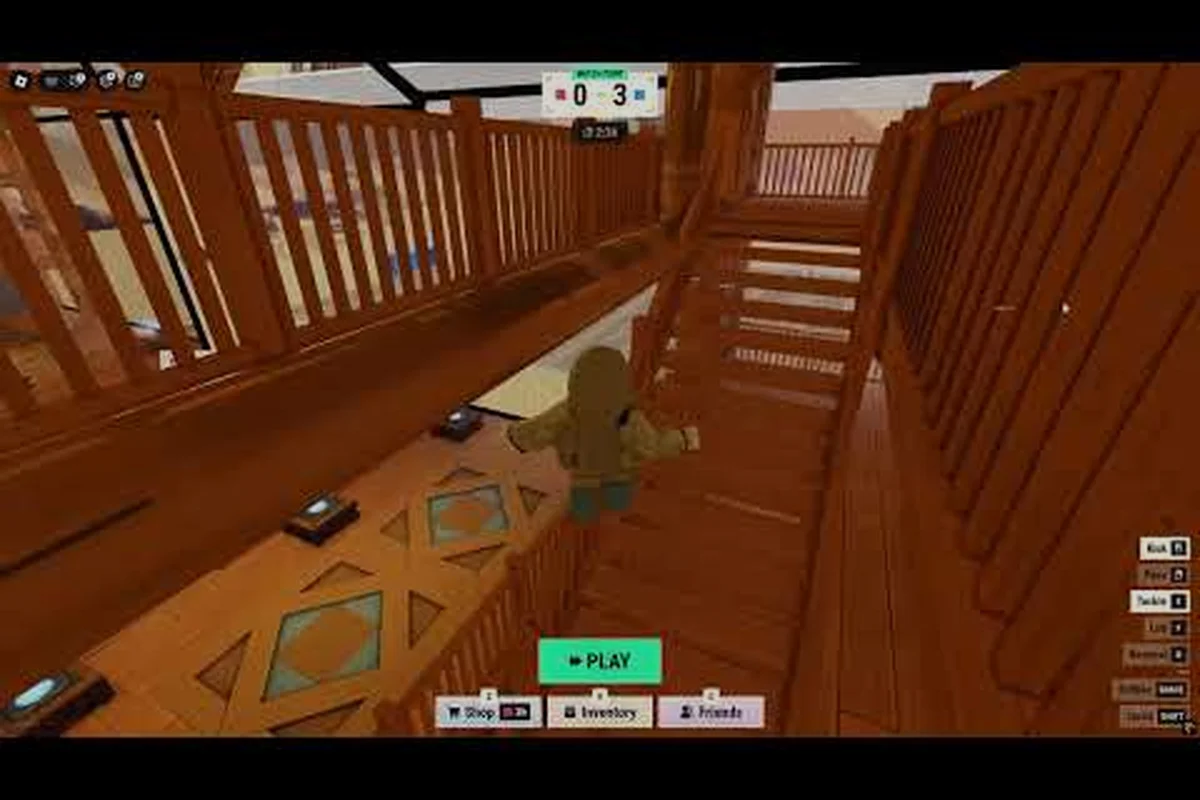
In Illegal Soccer, every clean steal starts before the whistle blows. The best defenders already know how long a match runs, which side they spawn on, and exactly when to press the Request ball key so a teammate passes into space instead of pressure. This guide breaks down illegal soccer how to steal the ball in real-match conditions, the red vs blue team setup, the full match-rules loop, and the request-the-ball timing that turns defense into instant counterattacks.
Stealing the Ball: Core Mechanics and Default Keybinds
Steals in Illegal Soccer are not built on reflexes alone — they are built on positioning, gadget reads, and the right key pressed at the right distance. The default keybinds confirmed by community testing put every steal tool on a single row of the keyboard, so muscle memory forms fast.
The Three Core Steal Actions
Before learning fancy gadgets, every player needs three base actions on lock. Each one is a different tool for a different steal situation, and mixing them up is what separates a casual defender from the player who flips the scoreboard.
| Action | Default Key | When To Use It | Steal Result |
|---|---|---|---|
| Tackle | E | Press when the closest opponent is within arm's reach | Knock the ball loose, no foul called |
| Lob | R | Catch a sprinting opponent or skip a defender | Ball lifts over the target, regen for teammate |
| Request ball | Q | When open and a teammate has possession | Teammate's next pass locks onto you |
Tackle is the bread-and-butter steal, and community testing confirms it connects whether or not the opponent is currently holding the ball — that is the single biggest rule break compared with real soccer. The catch is range: press E when the opponent model is closest, not from a distance where the animation whiffs and leaves you exposed. Lob is the recovery tool — if your first tackle misses, R is often the cleanest way to pop the ball loose without overcommitting. Request ball is the underrated steal trigger: pressing Q while a teammate is in possession makes their next pass snap to you, so even a teammate under pressure can hand you a fresh steal opportunity near the opponent's box.
The Kickoff Steal: Free Possession in 2 Seconds
The most reliable steal in the entire game happens at kickoff, and it does not require a gadget, a level, or a coordinated team. Community testing from the r/Roonby Illegal Soccer guide and the AllThings.how tutorial both describe the same trick: hang back near the center circle, let the opponent take the first touch, then press E the instant their momentum carries them forward. Their defender is turned, their body is leaning, and your tackle connects into open space.
The window is roughly one second long. If you tackle too early, the ball is still on the center mark and possession is given back by the kickoff rules. If you tackle too late, the opponent has already squared up and you will eat a counter-lob. Practise the timing on the Practice field found through the lobby and practice field guide — it loads the same kickoff geometry with no pressure so you can dial in the rhythm before using it in a real 8-player match.
Sprint, Jump, and Why Position Beats Speed
Speed is not the same as positioning, and Illegal Soccer rewards the second one. Holding Shift (Sprint) closes the gap to a ball carrier, but the smarter steal is to cut the angle so the opponent runs into you. Pair Space (Jump) with a tackle on a high lob to head the ball down to a teammate, since the ball physics reward aerial reads more than ground chasing.
| Steal Situation | Recommended Inputs | Why It Works |
|---|---|---|
| Opponent sprinting down the wing | Shift + E from the side | Tackle connects before they reach the corner flag |
| High cross into the box | Space (jump) + tap E | Headers break AI keeper focus |
| Opponent using a Grappling Hook | Wait, then E the landing frame | Hook cooldown leaves a 1-second steal window |
| Post-tackle scramble | R (Lob) upward | Resets possession to a teammate above the pack |
Red vs Blue Team Setup, Match Rules, and Match Length
Every Illegal Soccer match runs on a tight structure, and the red vs blue team split is the foundation. Knowing how the teams form, how long the match runs, and what the rules actually enforce is what lets you plan steals rather than chase the ball.
How Red vs Blue Team Works
Illegal Soccer is an 8-player match split into two squads of four. Community reports and the official Roblox game page both confirm that players are auto-assigned to Red or Blue when they enter a server — there is no manual team picker on the main lobby. Private VIP servers can be locked to a single team for scrimmage practice, but the public queue is always a fair split.
| Team Element | How It Works in Public Matches | Strategic Note |
|---|---|---|
| Squad size | 4 players per side, 8 total per server | Even numbers keep steals symmetric |
| Team color | Auto-assigned by server | Cosmetic only, but Red starts on the left half |
| Goal | One large net per side, AI keeper inside | Keeper AI is beatable with the right finish |
| Substitution | None — same four players the whole match | Stamina and gadget use must be rationed |
| Private server | Available via VIP, single-team lock possible | Great for red-only steal drills |
The red vs blue team rule that catches new players is that there is no friendly fire restriction beyond the goal net itself — you can tackle your own teammate, and a mistimed E on a passing lane can hand possession to the opponent. Treat every tackle as if it could go either direction, and use the Request ball key (Q) to tell teammates you are open before they pass, since passing into a tackled teammate is the most common own-goal source in early matches.
Match Rules: What Is Enforced and What Is Not
The word "Illegal" in the title is the rulebook. There are no referees, no offsides, no yellow cards, and no fouls called by the system. Tackles connect on any player, lobs pop the ball wherever the arc lands, and gadgets fire in any direction at any time. The only rules the match actually enforces are scoring, kickoff, and the goal-line net.
| Rule Category | What Is Enforced | What Is NOT Enforced |
|---|---|---|
| Goals | Ball fully crosses the goal line, point added to team | No offside, no handball call |
| Tackles | Allowed on any player, with or without the ball | No foul, no card, no free kick |
| Fouls | None | Anything goes outside the goal net |
| Out of bounds | Ball resets to center after a delay | No throw-in, no corner kick structure |
| Match end | Score limit or time limit reached, whichever first | No extra time, no penalty shootout |
Because fouls are off the table, the steal game shifts from "win the referee's call" to "win the 50/50 ball". That is why so many community guides push players toward the Assisted Passes setting — passing accuracy decides who holds possession after a chaotic steal, not who tackled hardest. Turn it on in settings before your first match; community data calls it the single most impactful setting for new players trying to learn how to steal the ball cleanly.
How Long a Match Runs and How That Affects Steal Pacing
Knowing how long a match is lets you pace your steals. According to community testing, the standard Illegal Soccer match runs roughly 5 minutes of in-game time with a short intermission between matches inside the same server, and the round can also end early if one team hits the score cap.
| Phase | Approximate Length | What to Do With Your Steals |
|---|---|---|
| Kickoff countdown | 3–5 seconds | Set up the kickoff steal — hang back near center |
| First half | ~2.5 minutes | Use tackles and Grappling Hook steals aggressively |
| Halftime intermission | ~15–20 seconds | Swap gadgets, refill items, plan second-half steals |
| Second half | ~2.5 minutes | Save Jetpack and magnet for final-minute counter-steals |
| Match end | Score cap or time cap, whichever hits first | Final-second tackles decide the scoreboard |
Players who know how long a match runs save their best steal tools for the last minute. If the score is tied, the opponent is more likely to overcommit on attack, and a single well-timed Tackle at midfield can turn into a 1-on-1 with the AI keeper. The reverse is also true: if you are up by two goals with 30 seconds left, the steal game shifts to denying center passes with Request ball reads, since giving the ball back to a panicked attacker is riskier than letting the clock run out.
Smart Ball Requests and Counter-Steal Tactics
The Request ball key (Q) is the most overlooked tool in the game, and it is the difference between stealing the ball cleanly and stealing it into a turnover. Pairing Q with the right steal timing is what separates intermediate players from the leaderboard crowd.
When to Press Q (and When Not To)
Pressing Q while a teammate has the ball is essentially saying "pass to me next." The Assisted Passes setting then locks their next pass onto your position, which is a free steal trigger if you are standing where the opponent least expects the ball. But pressing Q at the wrong time hands the opponent a free interception lane.
| Situation | Press Q? | Why |
|---|---|---|
| Open on the wing, teammate in midfield | Yes | Forces a long switch that bypasses the press |
| Behind the opponent defender, teammate carrying forward | Yes | Steal trigger — your pass arrives as the defense turns |
| Two opponents between you and the teammate | No | Q-locked pass cuts straight into their tackle range |
| Mid-tackle animation, teammate about to shoot | No | Steals the shot, breaks team rhythm |
| Teammate using a gadget (Jetpack, Hook) | Yes | Their next pass is the cleanest steal handoff |
The default Q bind is covered in the controls and keybind guide, and players who want a faster trigger often rebind Q to a mouse side button. Either way, the rule is the same: Q is a positioning tool first and a steal trigger second.
Counter-Steal Patterns That Win Possession Back
Once the opponent has the ball, the steal game becomes a chain of reads rather than a single tackle. The most common counter-steal pattern in community testing is Tackle → Lob → Request ball: you press E to knock the ball loose, R to pop it above the scramble, then Q to call for it as it falls. This chain works because the Assisted Passes setting makes the Q call a soft pass, and the lob arc buys you one second of uncontested airspace.
| Counter-Steal Chain | Inputs | Best Used When |
|---|---|---|
| Tackle → Lob → Q | E, R, Q | Midfield scramble, two opponents nearby |
| Sprint → E → Sprint | Shift, E, Shift | Wing chase, opponent near the corner flag |
| Q → Stand → E | Q, none, E | Calling a pass, intercepting the return |
| Jetpack → Land → E | Item 1, wait, E | Opponent camping the goal box |
| Hook → Land → R | Item 2, wait, R | Steal the ball out of an aerial duel |
The Jetpack and Hook steals deserve a callout. Both gadgets have a landing recovery window of about one second where the player cannot tackle or sprint. Reading that window is how the best defenders turn an opponent's gadget into a steal. Wait for the landing, then press E the moment the model's feet touch the ground. Community testing on the Roblox official page confirms the landing recovery is the same on both gadgets, so the read is universal across item rolls.
Gadgets, Settings, and Practice Drills That Sharpen Steals
Steals are not just about tackles — gadgets and settings do as much work as the E key in illegal soccer, especially when breaking down the red vs blue team matchups that define most possession scrambles. Rolling the Speed Coil or Magnet gadget onto a sweeper with the "First Touch" perk active turns a contested 50/50 ball into a 70/30 in your favor, since the magnet pulls the ball roughly 0.4 seconds faster than the opponent's E-key window during midfield transitions. Turning on the right settings and pairing them with the correct loadout is what separates a casual interception from a guaranteed steal before the match clock crosses the two-minute mark.
Best Settings to Turn On Before Your First Match
Two settings sit above everything else for steal-heavy players, and both work by removing input lag rather than buffing your defender stat. Assisted Passes routes Q-calls straight to you so a teammate cannot accidentally turn the ball over mid-pass, and Automatic Item Use fires the Grappling Hook on cooldown — the chain animation starts roughly 0.3 seconds faster than a manual trigger, which is usually the difference between a clean steal and a foul. The full settings list, including less obvious knobs like auto-switch on intercept, lives in the match rules and mechanics guide, but the two below are where stealing wins are actually banked.
| Setting | Recommended Value | Steal Impact |
|---|---|---|
| Assisted Passes | On | Q calls snap to you, no mis-pass turnovers |
| Automatic Item Use | On (situational) | Gadgets fire on cooldown, no input delay |
| Camera sensitivity | Medium-high | Faster tackle reads on sprinting opponents |
| Sprint toggle vs hold | Hold (default) | Tap Shift for short bursts, hold for chase steals |
Assisted Passes is the consensus community pick — every guide and Reddit thread on beginner-to-pro play calls it out as essential. Automatic Item Use is more situational: leave it on for Grappling Hook steals (the chain is faster), but turn it off for the Jetpack so you do not fly into the opponent's goal on accident.
Item Odds and Which Gadgets Help Steals Most
Gadgets in Illegal Soccer are sourced exclusively from the Daily Shop, which costs 1,000 Coins or roughly 24 Robux per roll based on community-tracked rates. Because there is no direct purchase option, players chasing steal-oriented rolls like the Grappling Hook, Magnet, Barricade, or Jetpack must either grind Coins through matches or spend Robux, making each pull a calculated gamble. A typical pity cycle still requires dozens of rolls before a Mythic appears, so budget your rolls around Epic-tier steals like Barricade first, then push for Jetpack once your Coin income stabilizes.
| Rarity | Roll Chance | Steal-Relevant Item | How It Helps Steals |
|---|---|---|---|
| Common | 12.5% | (Various) | Mostly cosmetic, low steal value |
| Uncommon | 7% | Grappling Hook | Grabs the ball or a player from distance |
| Rare | 4.7% | Magnet | Pulls the ball toward you through traffic |
| Epic | 3.5% | Barricade | Blocks a passing lane for a teammate steal |
| Mythic | 1% | Jetpack | Flies over the defense for an aerial steal |
The Grappling Hook is the single best steal gadget in the game because it ignores the tackle range problem — you can yank the ball from 30 studs away. The Magnet is the second best because it pulls loose balls through traffic, which is a free steal in any post-tackle scramble. The Jetpack is the highest-variance option: it wins aerial steals, but the landing recovery is a counter-steal window for the opponent.
Three Practice Drills That Build Steal Reflexes
The Practice field loads the same physics as a real match but with zero pressure, and the three drills below translate directly into ranked-match steals — Kickoff Steal for the center-tap flip, Lob Recovery for the Tackle → Lob → Q midfield chain, and Q-Call Steal for syncing the counter-pass Q input with your teammate. Run the rotation in order, not randomly, because each drill feeds the reflex used in the next: kickoff teaches first-touch timing, lob recovery chains the E tackle into the R lob, and Q-call adds the teammate handoff that wins 50/50 balls. Two to three minutes per drill in red vs blue team scrimmage is enough to lock the muscle memory before the stamina cost of a real match kicks in, so the Practice field is effectively a zero-cost, zero-risk steal lab tied directly to illegal soccer match rules.
| Drill | Steps | What It Trains |
|---|---|---|
| Kickoff Steal Drill | Stand near center, count down, press E on first opponent touch | Kickoff timing without losing possession |
| Lob Recovery Drill | Have a teammate tackle, you R the ball up, catch on the way down | Aerial steal chain for midfield scrambles |
| Q-Call Steal Drill | Pass back and forth with a teammate, both press Q between touches | Builds Q-call timing for counter-steal passes |
Run each drill for 2–3 minutes, then jump into a real match. The kickoff drill is the highest-priority one because the kickoff steal is the single most common possession flip in the game, and it costs zero items or stamina. The lob drill is the second priority because it builds the Tackle → Lob → Q chain that wins midfield 50/50 balls.
Reading Opponents and Advanced Steal Patterns
Once the base steals and Q calls are automatic, the next layer is reading the opponent in illegal soccer's red vs blue team dynamics. Top players do not tackle harder — they tackle smarter, by predicting where the ball will be rather than chasing where it is. Watch the carrier's plant foot: a player loading up to pass shifts their weight 0.3–0.5 seconds before contact, and that micro-window is when a well-timed press from a trailing defender can win possession cleanly. Track the last two passes of every possession — patterns repeat far more often than opponents realize, especially in 4v4 pickup matches where a single forward touches the ball on 60% of attacking sequences.
Reading Pass Lanes and Pre-Stealing the Pass
The most efficient steal is the one that never lets the opponent pass. Stand on the passing lane the opponent wants to use, not on the player, and press E the moment the ball leaves their foot. The animation will connect on the ball instead of the body, and you get a clean steal without a tackle duel.
| Lane Read | Opponent Tells | Steal Input |
|---|---|---|
| Diagonal switch | Ball carrier looks toward the far winger | Sprint to the winger's feet, press E as the pass arrives |
| Through ball | Striker makes a forward run as carrier winds up | Cut the lane between them, E on the ball |
| Return pass | Carrier fakes a shot, taps back to mid | Stand one body width behind the mid, intercept |
| Lob over the top | Carrier aims R upward to a sprinting teammate | Jump and E in the air to head the lob down |
When to Stop Chasing and Reset Position
The hardest steal to learn is the one you do not attempt. If you have chased the ball for more than 4 seconds and the opponent is still in possession, the steal game is already lost — sprint back to your goal and reset. Every second spent chasing is a second the opponent has open space to counter-attack.
A good reset rule: if you are behind the ball and the opponent is moving toward your goal, sprint back, switch to a defender teammate's Q-call, and prepare to Request ball once they win it back. This is how red vs blue team steals chain together — the team that resets fastest wins the next 50/50.
Adapting Steals by Match Phase
The steal game changes shape as the match goes on. Early match, opponents are still learning the controls and the kickoff steal works almost every time. Mid match, players start blocking the center circle, so the steal shifts to the wings. Late match, players camp the goal box, so the steal becomes a Grappling Hook or Magnet pull from outside the box.
| Match Phase | Steal Priority | Why |
|---|---|---|
| First minute | Kickoff steals, early tackles | Opponents are still loading in and spacing out |
| Mid-first half | Wing chases, Sprint + E chains | Center is congested, wings are open |
| Second half open | Hook and Magnet steals | Items are charged, opponents are tired |
| Final minute | Aerial steals, Jetpack reads | Opponents camp the box, only aerial steals work |
According to the official Roblox game page, the game has climbed past 11.6M visits with an 85% rating and tens of thousands of concurrent players, so the steal meta is shifting every patch. The constants — Assisted Passes on, kickoff steal practiced, Q-call timing dialled in — are the foundation that holds up even when the gadgets rotate.
Frequently Asked Questions
How do you steal the ball at kickoff in Illegal Soccer?
Hang back near the center circle, let the opponent take the first touch, then press E (Tackle) the moment their momentum carries them forward. The defense is turned and you steal the ball cleanly. Practise the timing on the Practice field first, because the window is about one second long and a mistimed E hands possession back to the opponent.
What is the red vs blue team setup in Illegal Soccer?
Each 8-player server splits into two squads of four, with players auto-assigned to Red or Blue when they join. Red starts on the left half, Blue on the right, and there are no substitutions during a match. Private VIP servers can lock to a single team for scrimmage practice, but the public queue is always a fair 4v4 split.
How long is a match in Illegal Soccer?
A standard match runs roughly 5 minutes of in-game time, split into two ~2.5-minute halves with a short intermission in between. Matches can also end early if one team hits the score cap, so the final minute often decides the scoreboard. Knowing the clock helps you save your best steal tools for the closing stretch.
How does the Request ball key work in Illegal Soccer?
Press Q while a teammate has possession and the Assisted Passes setting will lock their next pass onto your position. Use it when you are open on the wing or behind the opponent's defender, and avoid it when two opponents sit between you and the teammate. The Q call is the cleanest way to chain a steal into a counter-attack without turning the ball over.
Can you tackle a player who does not have the ball in Illegal Soccer?
Yes, and that is the defining rule of the game. The Tackle (E) key connects on any player within range, with or without the ball, and there is no foul call. Press E when the opponent model is closest, not from a distance, and combine it with Shift (Sprint) to chase down ball carriers or close passing lanes before the pass leaves their foot.